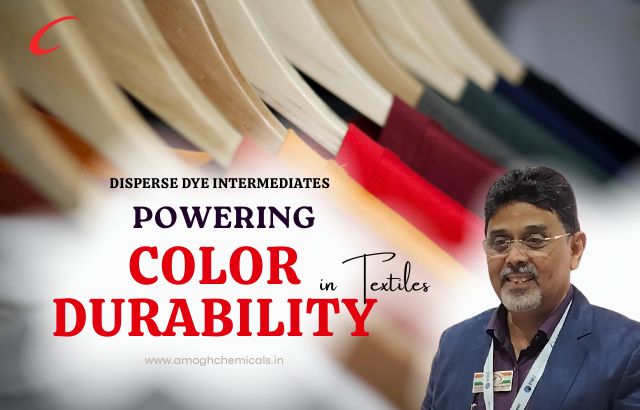
In textile industry, the demand for bright, durable, and high-performance colors has never been greater. At the heart of these vibrant fabrics lie disperse dyes—and more importantly, the intermediates that enable their colorfastness, stability, and application flexibility.
Amogh Chemicals, a trusted manufacturer in the chemical sector, offers a robust portfolio of disperse dye intermediates engineered to deliver superior performance across a variety of textile applications.
Whether you’re working with polyester, acetate, nylon blends, or modern technical fibers, Amogh Chemicals provides the building blocks needed for creating dyes that stand the test of time—both in color vibrancy and durability.
Why Disperse Dye Intermediates Matter
Disperse dyes are organic, non-ionic colorants commonly used for synthetic fibers. Their performance depends heavily on the quality and purity of the intermediates used during their synthesis.
High-quality intermediates ensure:
✔ Brighter shades
✔ Better dye–fiber affinity
✔ Superior dispersion stability
✔ Enhanced wash, light & perspiration fastness
✔ Thermal stability during high-temperature dyeing
Amogh Chemicals’ intermediates are formulated to guarantee consistency and reliability in industrial dye production.
Key Disperse Dye Intermediates from Amogh Chemicals
1. 2,6-Dibromo-p-Toluidine
A versatile and widely used intermediate in the production of disperse dyes, especially those intended for deep orange, red, and maroon shades.
- High bromination purity
- Excellent stability
- Ideal for high-performance polyester dyeing
- Supports consistent shade reproducibility
2. 3-Cyano-1-Ethyl-6-Hydroxy-4-Methyl-2-Pyridone
A specialized compound used to create dyes with:
- Exceptional brightness
- Strong build-up capacity
- Excellent migration properties on polyester
- Enhanced resistance to sublimation
Often used for brilliant yellow and red disperse dyes, especially in sportswear, upholstery, and outdoor fabrics.
3. Additional Key Intermediates
Amogh Chemicals also offers a spectrum of other intermediates such as:
- Pyridone derivatives for bright, high-fastness shades
- Amino anthraquinones for deep blues and violets
- Halogenated intermediates for intense chromophores
- Coupling components for enhanced molecular stability
Applications Across the Textile Industry
1. Polyester Dyeing
Polyester accounts for over 60% of global fiber consumption, making disperse dyes critical for industry operations.
2. Microfiber & Technical Textiles
Used in:
- Activewear
- Outdoor gear
- Automotive fabrics
- Filtration materials
3. Printing Inks & Digital Textile Printing
Disperse dye intermediates enable the production of inks with excellent sublimation characteristics—vital for modern digital sublimation printing.
4. Blended Fabrics
Polyester-cotton and polyester-spandex blends rely heavily on disperse dye systems for uniform coloration and fastness.
Interesting Industry Insights

📌 Global demand for disperse dyes is projected to grow at 5–6% CAGR due to booming polyester production.
📌 Over 80% of sportswear uses disperse dyes because of their heat resistance and bright shade capabilities.
📌 Digital textile printing—particularly sublimation printing—is expected to surpass $6.5 billion globally by 2027, increasing demand for high-quality intermediates.
📌 The shift to sustainable dyeing is pushing manufacturers toward high-purity intermediates that reduce effluent loads and improve dye uptake efficiency.
FAQs: Disperse Dye Intermediates & Amogh Chemicals
1. What are disperse dye intermediates?
They are chemical compounds used as the foundational building blocks in the synthesis of disperse dyes, especially for synthetic fibers like polyester.
2. Why choose Amogh Chemicals?
- High-purity intermediates
- Consistent batch quality
- Industry-tested formulations
- Strong R&D foundation
- Timely delivery and reliable logistics support
3. Are these intermediates suitable for eco-friendly dye formulations?
Yes. Amogh Chemicals adheres to strict quality control that supports sustainable dyeing practices by reducing unnecessary waste and improving dye uptake.
4. Do you provide technical support?
Yes. The company offers formulation guidance, shade matching support, and application recommendations.
5. Can these intermediates be used in digital printing inks?
Many of Amogh’s intermediates are ideal for sublimation and disperse ink formulations due to their thermal stability and bright chromophore development.
Examples of Dye Formulations Using These Intermediates
Example 1: Bright Red Disperse Dye
Using: 2,6-Dibromo-p-Toluidine
Properties:
- High dye–fiber affinity
- Excellent build-up
- Brilliant shade intensity
Example 2: High-Fastness Yellow Dye
Using: 3-Cyano-1-Ethyl-6-Hydroxy-4-Methyl-2-Pyridone
Properties:
- Outstanding light fastness
- Smooth dispersion profile
- Ideal for automotive & upholstery fabrics
Example 3: Deep Blue Shades
Using: Amino anthraquinone derivatives
Properties:
- Deep chromatic strength
- Good thermal stability
- High resistance to bleeding
Guidelines for Students Seeking a Future in the Chemical Industry

A career in chemicals—especially dye and textile chemistry—offers vast opportunities. Here are some professional guidelines for aspiring students:
1. Build a Strong Foundation in Chemistry
Focus on:
- Organic chemistry
- Polymer science
- Analytical methods
- Industrial chemistry
2. Develop Practical Laboratory Skills
Master techniques such as:
- Chromatography (HPLC, TLC)
- Spectroscopy (UV–Vis, IR)
- Titrations, purification & synthesis
3. Stay Updated with Industry Trends
Follow developments in:
- Green chemistry
- Sustainable dyestuffs
- Digital printing technology
- Smart textiles
4. Complete Internships or Industrial Training
Real-world experience in chemical plants or R&D labs is invaluable.
5. Learn Industrial Safety Standards
Familiarize yourself with:
- REACH
- GHS safety norms
- Responsible Care practices
- Waste management principles
6. Focus on Problem-Solving & Innovation
The industry values professionals who can:
- Improve dye performance
- Reduce environmental impact
- Develop new intermediates
- Optimize production processes
7. Work on Communication & Documentation
Clear technical writing and analytical reporting are essential for growth.
Conclusion

Amogh Chemicals continues to be a leading supplier of disperse dye intermediates, supporting global dye manufacturers with high-quality, reliable, and performance-oriented chemical solutions. From everyday apparel to technical textiles, Amogh’s intermediates play a crucial role in creating the vivid and lasting colors consumers love.
Whether you’re a manufacturer enhancing your dye formulations or a student envisioning a future in industrial chemistry, the world of textile chemicals offers countless opportunities—and Amogh Chemicals stands at the forefront of this dynamic landscape
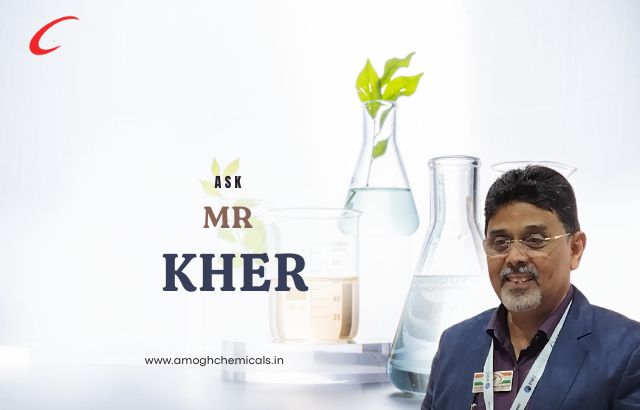
Here’s a concise version of the author bio for Mr. Shripad Kher:
About the Author – Mr. Shripad Kher

Mr. Shripad Kher is a distinguished leader in the textile dye and chemical intermediates industry, driving innovation and quality at Amogh Chemicals. On 8th November 2024, he was honored at the Merchant Adventurers’ Hall, York, UK, by being admitted as an Associate of the Society of Dyers and Colourists (SDC). This recognition highlights his significant contributions to the global color and dyeing industry and underscores his role in advancing high-performance, sustainable solutions in textile chemistry