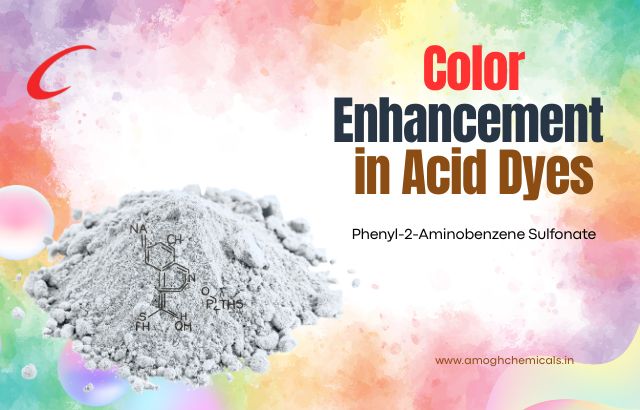
Acid dyes are widely used in the textile industry, for dyeing wool, silk, and nylon fabrics, as well as in paper, leather, and even for food and cosmetics. These dyes are an essential part of the dyeing and coloring process, but achieving vibrant, long-lasting, and even coloration can be a challenge. One of the promising compounds used to enhance the performance of acid dyes is Phenyl-2-Aminobenzene Sulfonate (PAAB). This chemical acts as an auxiliary agent that improves dye uptake, color intensity, and stability.
In this blog, we will explore the role of PAAB in acid dyes, the responsibilities of chemical companies like Amogh Chemicals, and provide guidelines for students in chemical engineering and chemical technology.
Understanding Acid Dyes and Their Challenges
Acid dyes are known for their ability to produce vivid, intense colors on proteins and synthetic fibers. However, achieving optimal color depth and consistency can be difficult due to:
- Uneven Dye Uptake: Fibers may not take up the dye evenly, leading to blotchy or patchy colors.
- Color Fastness: The color may fade over time due to washing or exposure to light.
- Environmental Impact: Some acid dyes are toxic or non-biodegradable, causing environmental pollution.
These challenges often require innovation in dye formulations, and Phenyl-2-Aminobenzene Sulfonate (PAAB) plays a key role in improving the overall quality of the dyeing process.
The Role of Phenyl-2-Aminobenzene Sulfonate in Color Enhancement
PAAB, a sulfonate-based compound, is used as a dye auxiliary in acid dye formulations. Its primary functions include:
- Improved Dye Uptake: PAAB helps to increase the affinity of the fiber for the dye. It ensures that the dye molecules penetrate the fabric more effectively, resulting in deeper and more uniform colors.
- Enhanced Color Intensity: The presence of PAAB in dye formulations boosts the color intensity. The molecule helps in creating a stronger interaction between the dye molecules and the fibers, leading to more vibrant colors.
- Better Dye Stability: PAAB helps in stabilizing the dye-fiber interaction, thus improving color fastness to washing, light, and rubbing.
- Reduced Dyeing Time: The chemical interaction between PAAB and acid dyes can also reduce the overall dyeing time by facilitating a quicker uptake of the dye molecules by the fabric.
Example of Phenyl-2-Aminobenzene Sulfonate in Use:
In the textile industry, a company like Amogh Chemicals could develop a new line of acid dyes enhanced with PAAB. For example, a red acid dye designed for wool textiles might show a significant improvement in color depth and stability when PAAB is added to the dye formulation. The fabric dyed with this enhanced dye would show deeper shades of red, better washfastness, and improved resistance to fading under light exposure.
The Role and Responsibilities of Chemical Companies
Amogh Chemicals, a leading name in the chemical industry, plays a crucial role in the development and commercialization of advanced chemical formulations like PAAB-enhanced acid dyes. Some key responsibilities of chemical companies in this context include:
- Research and Development (R&D): Companies like Amogh Chemicals invest heavily in R&D to create innovative products. For instance, Mr. Chandrashekhar D. Patil, Director – R&D at Amogh Chemicals, could lead teams in developing more efficient and environmentally friendly dyeing chemicals, such as advanced formulations incorporating PAAB.
- Safety and Compliance: Chemical companies are responsible for ensuring that the chemicals they produce are safe for both workers and consumers. This includes adhering to industry regulations such as REACH, OSHA, and local environmental laws.
- Environmental Stewardship: Companies must also focus on creating sustainable and eco-friendly products. This involves reducing harmful emissions, minimizing waste, and using renewable resources in manufacturing processes.
- Customer Support and Education: Providing technical support to customers and educating them about proper handling and application of chemical products is vital. This could include offering workshops or seminars on improving dyeing processes with chemicals like PAAB.
A Few Calculations: Dyeing Process with PAAB
Let’s look at some simple calculations involved in the application of PAAB in the dyeing process:
- Dyeing Efficiency Calculation:If you are dyeing 1 kg of wool fabric and you want to know how much PAAB is required to achieve a 20% improvement in color intensity, the calculation would look like this:
- Suppose the standard PAAB concentration for enhancing acid dyes is 5%.
- The weight of PAAB needed = 5% of 1 kg = 50 grams.
- Improved Dye Uptake Calculation:If the dyeing process without PAAB results in a 70% uptake of dye, and PAAB is expected to increase dye uptake by 15%, then:
- New dye uptake = 70% + 15% = 85%.
This means that, with the addition of PAAB, you are getting more dye adhered to the fabric, which results in a deeper, more uniform color.
FAQs on Phenyl-2-Aminobenzene Sulfonate and Acid Dyes
Q1: What is Phenyl-2-Aminobenzene Sulfonate (PAAB)?
A1: PAAB is a sulfonate-based compound used to enhance the performance of acid dyes. It improves dye uptake, color intensity, and stability, resulting in better dyeing quality.
Q2: How does PAAB improve color fastness?
A2: PAAB helps stabilize the bond between the dye and the fiber, reducing the risk of the color fading under washing, light exposure, or rubbing.
Q3: Can PAAB be used in all types of acid dyes?
A3: PAAB is commonly used in wool, silk, and nylon dyeing, but its application can be extended to other fibers with appropriate formulations. It works best when combined with certain types of acid dyes that are reactive with its chemical structure.
Q4: Are there any environmental concerns with using PAAB?
A4: As with any chemical, environmental safety should be considered. PAAB, when used in proper concentrations and under regulated conditions, poses minimal risk. Chemical companies, such as Amogh Chemicals, are focused on ensuring that PAAB formulations meet environmental standards.
Q5: How much PAAB should be used in a dyeing formulation?
A5: The optimal amount of PAAB depends on the type of dye, the fabric, and the desired effect. Typically, concentrations range from 1% to 10%, but this should be determined through lab trials and customer specifications.
Guidelines for Chemical Engineering and Chemical Technology Students
For students pursuing degrees in chemical engineering or chemical technology, understanding the applications of chemicals like PAAB in industry is crucial. Here are some guidelines to help you in your academic journey:
- Study Material Science: Understanding the interaction between dyes and fibers, and how auxiliaries like PAAB enhance these interactions, is essential. Study the chemical bonding and molecular structures that influence dyeing behavior.
- Focus on Sustainable Chemistry: With increasing environmental concerns, focus on the development of eco-friendly dyes and chemicals. Study green chemistry principles, such as reducing harmful chemical use and improving the biodegradability of products.
- Hands-On Experience: Participate in laboratory work or internships at chemical companies. Practical knowledge of dyeing processes, such as those involving PAAB, will give you a competitive edge in the job market.
- Follow Industry Trends: The chemical industry is evolving with new technologies and environmental regulations. Keep up-to-date with the latest trends in chemical engineering, such as the development of sustainable dyes and catalysts.
Conclusion
The role of Phenyl-2-Aminobenzene Sulfonate (PAAB) in acid dye formulations represents an innovative step in improving the color quality and efficiency of dyeing processes. Chemical companies like Amogh Chemicals are leading the charge in research, development, and environmental sustainability. As we continue to innovate, the importance of understanding these chemical processes grows for future professionals in the chemical engineering and technology fields.
If you have any questions or need further assistance, feel free to reach out
Disclaimer- The information provided in this blog is for educational and informational purposes only. The content reflects the views and insights of the author and contributors, and while we strive to ensure the accuracy and reliability of the information, we make no representations or warranties regarding the completeness, accuracy, or applicability of the information provided.
The use of Phenyl-2-Aminobenzene Sulfonate and other chemical additives in industrial applications should always be carried out in accordance with relevant safety guidelines, local regulations, and industry best practices. It is essential to consult with qualified professionals or industry experts before implementing any new chemical compounds or processes into manufacturing or production systems.
Amogh Chemicals, its affiliates, or any related parties are not liable for any direct, indirect, or consequential damages arising from the use of the information provided in this blog. The content does not constitute professional advice and should not be used as a substitute for expert consultation.
Always follow the appropriate safety protocols and environmental guidelines when handling chemicals in any capacity.